October 3, 2007

Giving Children Wings


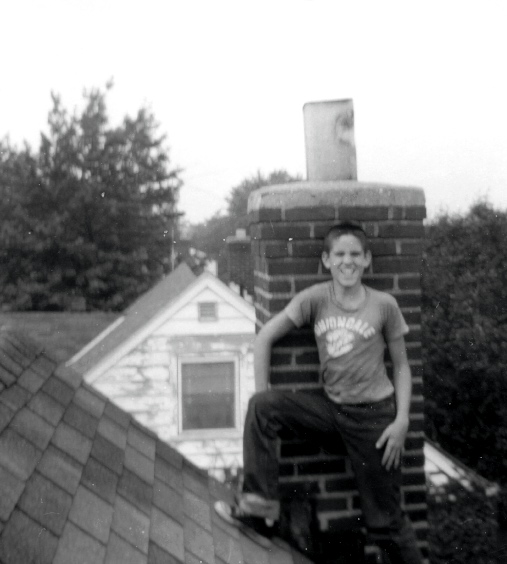
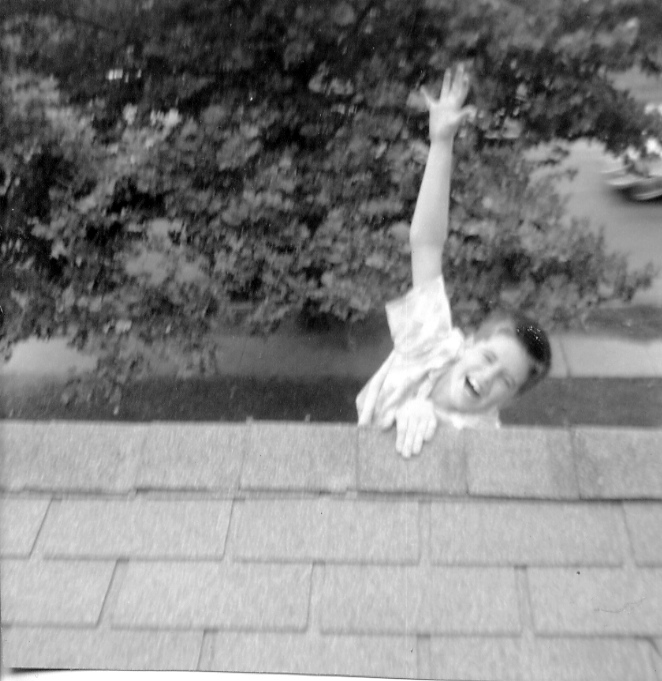
My mom's combination of fearlessness, faith in God, and experience with five brothers made mom a wonderful mother of boys. She didn't worry; she didn't clip any wings. She didn't let little things like sons on the roof or a son out of touch hiking the Appalachian trail for months upset her. Joe and Andrew look so pleased with themselves without any fear they might fall off or get in trouble. Her shy, timid, anxious daughter was a mystery to her:) I was annoyed that she didn't complain that my brothers forgot her birthday or mother's day, called once every two months.

Giving my daughters wings has been a bigger challenge for me, but I have not infected them with my anxieties. My oldest daughter was a bold adventurer from birth. From her company's web page: "Anne arrived at IPA after spending a year in Kosovo working with the UN Population Fund, having previously consulted for UNFPA in New York. She spent several months with the Centre for Conflict Management in Butare, Rwanda, where she was a researcher on the gacaca tribunals. She has also spent several years as an economic consultant in the private sector. She has traveled to over 65 countries, and has lived in Niger, Rwanda and Kosovo. " When she was 23, her boss wrote: "Anne can handle herself anywhere in the world." At the time she had to tell people: "look for the 16 year old in the hotel lobby."

On our living room wall is a huge world map, with push pins marking all the places my girls have traveled to. I recall asking another mother whether are grown children live close by. She told me no, one was 10 miles away and one was 20 miles away. At the time Anne was living in Africa and Michelle was in Australia on business for three months.

My daughters honor my anxieties. I have disciplined myself to worry when they are actually in flight, not on the ground. They send me their itineraries and call me when they land. I follow their flights on flight tracker and never sleep well when they are in the air. Two years ago Anne was on an 18-hour flight to Singapore; I couldn't sleep when she was in the air. My daughter Rose, the human rights lawyer, has promised me she will never visit her law firm's Iraq office.

October 1, 2007

Mary Jo or Mary Joan

At age 63, I still don't know my first name. I was baptized Mary Joan Koch. My family has always called me Mary Jo. My mother's name was Mary, my father's name was Joseph. Joan was my mom's younger sister. I was the first, eagerly awaited daughter. My parents had a war-time romance; they exchanged daily letters for four years. When Mom was pregnant, both she and my Dad referred to me as Mary Jo. They were positive I was a girl in the days before sonograms. This is unbelievably prescient because they then had five boys.

My youngest daughter Carolyn, at 3, flummoxed me : "Mommy, your mother's name is Mary, your father's name is Joseph. Why didn't they call you Jesus?" I had never realized Mary Jo was the feminine version of Jesus:) Mary Jo seemed to have bad karma. People only got my name straight after Mary Jo Kopechne drowned after Ted Kennedy's car fell in the water and Mary Jo Buttafuco got shot by the teenager whom husband was having an affair with.

I have always been Mary Jo to my family.Throughout grade school, high school, graduate school, I preferred to be Mary Joan Koch. Most of my friends called me Mary Joan. The Mary and Joan aspects of my personality coexist uneasily. Certainly as a teen I admired Joan of Arc far more than Mary, the mother of Jesus. Joan is the manic side of my personality. I hadn't yet realized Mary was a feminist. I have always been a rebel, a questioner of authority, a skeptic , unwilling to accept conventional wisdom. As a girl, I monthly confessed "I was disobedient." Too many of my bosses would agree that I've never outgrown that sin. At Fordham, as the first girl most Jesuits had ever taught, I was always "Miss Koch."

I have always been ambivalent about marriage and name changes. As a card carrying feminist in 1968, I felt I should keep Koch. I had become Mary Jo, leaving Mary Joan behind. But Koch is a name pronounced crotch and worse by high school boys. My best friend called me Kochie, the boys called me Crochie. So I chose my new husband John's last name because it sounded English.
In 1987, after 12 years of full-time childrearing, I returned to graduate school as Mary Jo and never again used my married name. I had recently been diagnosed with bipolar disorder; it was a tumultuous time in my life. When asked if my going back to Koch signaled a troubled marriage, I vehemently denied it, laughing, "this has all of the satisfactions of divorce, with none of the complications." Nine years later, John and I did divorce; our once excellent marriage had died slowly and painfully, dispute our genuine efforts to revive it.

I received a Master of Library Science degree in 1991, a Master of Social Work degree in 1993. Both diplomas were awarded to Mary Jo Koch. To my therapy clients and my library patrons, I was Mary Jo Koch. My Hispanic patients were puzzled how their Jewish therapist has such an Irish face.

For 17 years years I was a children's, teen, and reference librarian in several Long Island and Queens libraries. I was a troublemaker in a profession that doesn't reward troublemakers. Mary Jo Koch was rather notorious; the possibility of burying her was irresistible. I met Peter , the love of my life, in a Jane Austen discussion list. Jane is an ambitious matchmaker; I was in New York and Peter was in London. After a five-year long-distance courtship, we were married in December 2001. Madly in love, I renounced the name I had used for 37 of my 56 years and took Peter's name.

Recently I have abandoned librarianship. I am sick of the mediocre bosses, book-length policy manuals, rigid hierarchy, and promotions based on hours served, not ability, that characterize public librarianship in my county library system.. My social work and library careers have not been spectacular. Being open about my manic depression was a mistake. Having a small private practice is the safest way to be a social worker, but my clients tend to get better too fast.

I need to be my own boss. Two years ago, I started Ageless Internet, an internet tutoring and consulting company. Abruptly, I decided that my new business cards should say Mary Joan Koch to mark a new chapter in my life. Mary Joan Koch seems to represent my career self, myself as a writer. Now that I am not working full-time, I hope to fulfill a 34-year -oid ambition to write about feminism and motherhood. As a late 1960's radical feminist, I never, in my worst nightmares, would have believed that 40 years later, our country would refuse to enact family-friendly policies and honor caregiving, whether as a parent, day care teacher, or home health aide.

I suspect reverting to Koch periodicall is a way of stayed connected to my mom and dad, whom I miss even more since becoming a grandmother. My mom, who died three years ago, was Mary Koch. Mom supported every left/liberal organization in the US. I expect to be getting solicitation letters from these organizations forever. Right after she died, I felt compelled to contribute to her favorite organizations to honor her memory, but I sadly learned that I didn't share her amazing generosity. When I sort through the envelopes, I often feel mildly shocked that I too am Mary Koch. But it would feel blasphemous to try to capture her glory.

Mistakenly, you might believe that the German Koch is the least impressive name. When Ed Koch was mayor of New York, my mom was asked so many times if she was related, she began to respond: "Yes, I am her secret wife." My brother Stephen, a chemistry professor, replies, "Einstein's mother's maiden name was Koch. We're related to that side of the family."

I will spare you the stories of my various pseudonyms and my hair colors. One social worker advisor laughed, "When the shit hits the fan, you can always change your name and your hair color.

I wrote this post a while ago. The fact that I decided to share it on Salon makes me question whether the Joan persona is gained ascendancy after three months of Mary's dominance. Joan is the writer; Mary only reads.
September 2, 2007

Perspective

Admit that I could write now a post that I might write during my usual fall fling, and it would have no effect whatsoever on how I spend my time, what I write. The Mary Joan of the spring and fall fling is not my real self; I wouldn't be happy if I could be that person all the time. I don't want to write the great book on manic depression. For the most part, I would like to put that agonizing part of my life behind me. I realize it is important now to record my perspective on what I might be feeling and saying a month from now.

I coped with the shame and agony of my illness by planning to write about it. The dilemma is my perspective when manic is warped. The rest of the time I am too ashamed of my manic excesses to want to glorify them. I am not proud of what I wrote in the hospital. I was acutely ill, and I made it impossible to get the help I needed by alienating everyone with my intellectual arrogance. My illness might not have been so terrible if I hadn't been ensnared by psychotic transference with Bill. If he had been a decent psychiatrist, he would have refused to treat me after November 1987. Yes I would have been devastated, but I would have gone past it. Now, I have only truly transcended Bill since I married Andy.

Bill encouraged me to disown my maternal self, encouraged grandiose career goals that I wasn't able to live up to when I wasn't manic, wasn't able to succeed at when I was manic. I have every reason to be nervous when I say, Bill said.

I should go back and comment on what I wrote during the spring fling. It should give me more perspective if I experience a fall fling. Actually, I know I will experience something resembling a fall fling; that is why I am preparing for it.

July 17, 2007

Experts, Testing, and Misdiagnosis

Warning: by nature I am a skeptic and a heretic who hasn't forgotten her radical pacifist youth. Joan of Arc is my patron saint. I birthed two children at home, nursed them for years, sent them to a hippy school of 50 kids from 5 to 18. But I am not an ignorant nutcase grandma, ignorant of the "magnificent" advancements in child psychiatry. Before children, I edited psychiatry books for 7 years; our authors were world-famous psychiatrists who knew how to heal people without drugs. I have a master's degree in library science and a master's degree in social work, specializing in mental illness and families.

As the oldest of 6, the mother of 4, the oldest cousin of 45, a children's librarian, a playgroup coordinator, a breastfeeding counselor, a nursery school membership coordinator, a school volunteer, a family therapist, I have known many hundreds of young children. I have reassured countless mothers that their different child just seems a creative divergent thinker, not a psychiatric case or a potential psychopath; I have often been thanked for my sane, helpful advice.

This week buy a copy of: For Her Own Good: Two Centuries of Expect Advice to Women by Barbara Ehrenreich and Deirdre English. I am baffled that this generation of young parents, the most high educated parents in history, are sometimes willing to trust their young children to so-called experts, testing, possible medication. When I was worried about my preschool kids, I called my mother or mother-in-law who had raised 11 kids between them. I asked my grandmother with 7 kids and 31 grandkids whether I should be worried. I went to the library and read all I could about creative children. I researched my worries.I had honest discussions with other mothers and teachers who knew them. Twice I switched nursery schools. I did not take them to a psychiatrist or psychologist. I already knew that my pediatrician's childrearing advice was misguided; I learned not to ask them questions when I was probably going to disagree with his answers.

Twenty-two years ago, at the age of 40, I was diagnosed with bipolar disorder. The diagnosis hasn't exactly improved my life. I spent ten years taking horrible meds that felt like they were lowering my IQ by 40 points when they weren't producing physical side effects. I met any number of unhelpful, even destructive, psychiatrists. But far worse were the tremendous stigma and discrimination I encountered in both social work and librarianship. Once anyone knows your diagnosis, you have to be a perfect employee, or people fear you will go postal at any moment. My only dangerous weapons have always been my tongue and my pen.

If a young child is diagnosed autistic, or bipolar, or ADHD as a preschoolers, that diagnosis will affect his entire life. Even his loving parents, aunts, uncles, siblings will regard him differently. When I was in social work school in 1993, it was psychiatric dogma that bipolar disorder could not be diagnosed until late adolescence. Now kids are being diagnosed as preschoolers and treated with antipsychotics, which are only approved for chronic schizophrenics. Psychiatrists seem reluctant to prescribe traditional mood stabilizers because, after all, they are generic now. They can't be much good, can they? Some antipsychotics cause tremendous weight gain and are implicated in childhood diabetes. Before medicating their child, perhaps parents should take the meds themselves and experience their effects. Most college students know ritalin will improve their performance on the SATs or final exams.

I am skeptical about the usefulness of testing young children. We endlessly agonized over subjecting our kids to an IQ test to get them into the only public school in Manhattan for gifted children. Anne, my oldest, was a bit too creative for her own good. When asked to complete figure drawings, she ignored the missing eyes or ears to adorn the figure with gorgeous hats featuring birds on top and with princess gowns. Some kids won't talk to their parents' friends upon command. Why would they open up to a stranger?

Little kids are not fooled by being told the nice lady is going to play games with them. They sense they are falling short, that they might not be good enough, that their parents are worried. That must affect their behavior during the test, at preschool, at home.

We had created a very hostile world for children. Far too many experts seem interested in labeling and drugging children so they fit into that world, rather than reforming society so children's amazing creativity and individuality can flourish. I am not denying that some troubled children could benefit from professional evaluation and help. Certainly parents can research and implement some of the stimulation suggested for certain learning difficulties. But how can an expert spend a few hours dealing with a possibly uncooperative child and convince you that they "know" what is wrong with them? When I was growing up, the diagnosis "brat" was used freely, but you were expected to outgrow brattyness. "Oppositional defiant disorder" can sometimes sound like the same thing.

I have gone to psychiatric lectures on childhood mental illness where home, parental work hours, school, neighborhood are never mentioned. The assumption is the child has a lifelong biological brain disorder. even though no physical test can validate that diagnosis. I suspect 100 years from now current psychiatric treatment of children will be seen as a disgraceful episode in medical history, one more flagrant example of experts giving mothers destructive advice "for their own good."